
Supporting our members in their efforts to achieve the highest level of repute, knowledge and profitability.
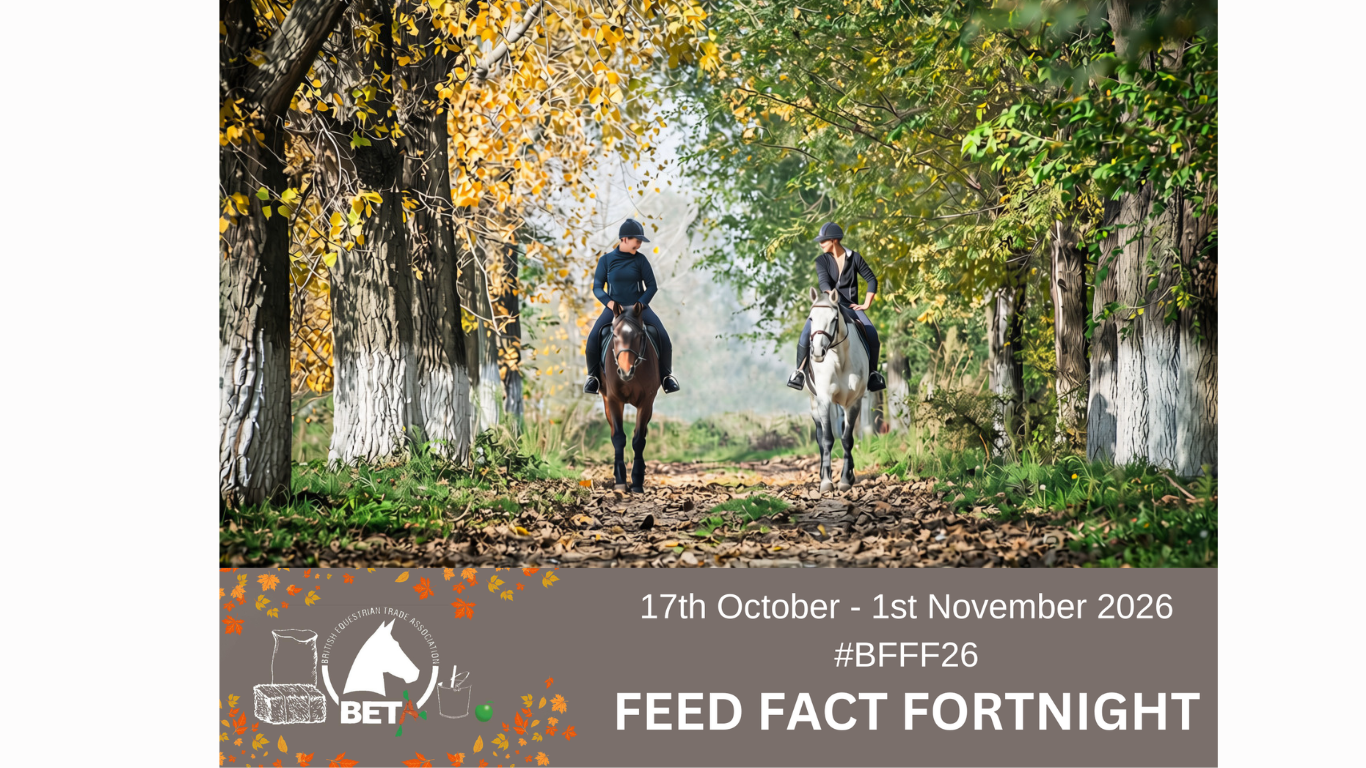



We have a great giveaway in partnership with Simple System!
WIN a bag of Simple System’s Meadow Forage Pellets: a nutritious blend of easily digested forages, grown together, to increase variety in the diet.
PLUS a Simple System Bucket Cosi to help keep your feed hygienic.
Thank you!
To take part in the competition, answer the question below in the comments.
Question: Why is it important to feed a variety of different forage types, such as the grasses, sainfoin, Birdsfoot trefoil and chicory found in Meadow Forage Pellets?
A. To support a diverse range of gut microbes
B. For environmental enrichment
C. To offer different tastes and textures
D. All of the above
Let us know in the comments below!
Then. . .
Follow us and @simplesystemhorsefeeds, if you haven’t already done so.
Like this post
Deadline for entries: 1st November, 12 pm
Winner announcement: 2nd November
This competition is run by BETA on both Facebook and Instagram. Correct entries will be combined from both accounts, and a winner will be selected at random from the combined entries. This competition is not sponsored, endorsed, administered by, or associated with Facebook or Instagram. No cash alternative is offered.
Good luck to everyone entering!
#simplesystem
#30yearsofforagefeeds
#superiorfeedsnaturally

A horse feed balancer is a versatile addition to any horse`s diet—whether you have a competition horse, a growing horse, or a good doer! Thank you to @redmillshorse for sharing this brilliant expert advice and supporting Feed Fact Fortnight!
#FeedFactFortnight #ConnollysRedMills #EquineNutrition #HorseCare #FeedBalancers #BETA
Thanks to @dengiehorsefeeds , we met 26-year-old Connemara Dermot.
Winter can be a particular challenge when managing a veteran horse or pony, especially if dental issues mean they can no longer chew long-stem hay or forage effectively. Thank you to Dengie for sharing this wonderful, practical advice and featuring Dermot`s routine.
Follow BETA for more advice, stay tuned, and keep your eyes peeled—we have great competitions coming soon!
#FeedFactFortnight #VeteranHorseCare #Dengie #EquineNutrition #HorseHealth #BETA #ForageReplacer
Today, we share advice from ReadiGrass on supporting veteran horses. Thank you!
Winter months can be challenging for veteran horses. As the temperature drops and grass loses some of its nutritional value, older horses may need a little extra support to help them maintain weight, condition and to keep warm.
Good-quality forage should always be the foundation of the diet, and dried grass can be a nutritious way to provide extra fibre and energy when grazing is limited. Keeping the diet as natural and simple as possible can also support gut health and provide valuable enrichment. For older horses, particularly those who struggle to maintain condition or chew long-stem forage, offering an alternative or additional source of good-quality, easily digestible fibre such as dried grass can make a real difference.
Thank you to @nafuk for sharing this fantastic, practical advice for Feed Fact Fortnight!
Kate Hore (Head Nutritionist at NAF) explains why horses on predominantly forage-based diets still need those essential micronutrients—vitamins, minerals, and trace elements—that aren`t provided in the right amounts by grazing and forage alone. Follow for more advice, stay tuned, and keep your eyes peeled—we have great competitions coming soon!
#FeedFactFortnight #EquineNutrition #NAF #HorseCare #BETA #ForageBalancing
Teeth through the ages...
Throughout their lifetime, a horse`s teeth continually erupt and wear. This means regular checks from a suitably qualified Equine Dental Technician or vet are recommended—even before they start work or after retirement.
As foals, teeth begin to erupt from one to two weeks after birth, reaching a full set of 24 by 9 months. Like humans, foals have baby teeth, which are replaced by adult teeth between ages 3 and 5.
When adult teeth erupt, they dislodge the first teeth (caps). This can make chewing painful—especially long fibre forage and short grazing—causing sudden weight loss in youngsters. Offering soaked feeds and hay replacers like HayCare makes eating much easier and helps maintain condition.
Dental checks are recommended at least once a year, though youngsters and older horses may need more frequent care. If your horse has difficulty chewing or body condition concerns, contact your vet or EDT.
Once adult teeth are fully in at around age 5, they continue changing both on and beneath the surface. By age 15 to 16, dental issues are very common. Some can be minimized with early dental care and proper feeding. For example, peripheral caries are less likely with low sugar, low starch diets.
On the surface, crown wear and diastema (gaps between teeth) are frequent issues. Diastemas trap food, causing painful gum inflammation and infection. Treatment ranges from flushing to widening gaps. Avoid chops or chaffs; instead, opt for soaked forages.
In their early 20s, crown wear often outpaces eruption, meaning their teeth are wearing out. This makes chewing forage difficult, and you may notice quidding. It is time to offer a soaked hay replacer like HayCare, which mirrors high-fibre hay in an easily manageable format.
Beneath the gums, root depth decreases over time due to continual eruption, causing tooth instability and uncomfortable chewing. Soaked hay replacers are recommended here too.
Thank you Simple System for this very informative post.
For feeding advice, contact the Simple System Feed Line on 01728 604008 or email info@simplesystem.co.uk
BETA FFF is here, and we have an exciting giveaway in partnership with EquiGlo!
Win a navy, quilted EquiGlo Jacket. Available in sizes 8 (small), 8/10 (medium) and 12 (large)!
Thank you, Equiglo!
To take part in the competition, answer the question below in the comments.
Question: Is soaked beet a nutritionally complete food?
Let us know in the comments below!
Then. . .
Follow @equiglohorsefeeds and us if you haven’t already.
Like this post
Deadline for entries: 29th October, 12 pm
Winner announcement: 30th October
This competition is run by BETA on both Facebook and Instagram. Correct entries will be combined from both accounts, and a winner will be selected at random from the combined entries. This competition is not sponsored, endorsed, administered by, or associated with Facebook or Instagram. No cash alternative is offered.
Good luck to everyone entering!
Long grass = safer grass? Not always.
It’s easy to assume that short, actively growing grass is the bigger concern for horses prone to laminitis, while long, fibrous “standing hay” is the safer option. But grass length only tells part of the story.
What really matters is how much your horse actually consumes. Short grass may contain more sugar gram-for-gram, but horses can take much bigger mouthfuls of longer grass - meaning their total sugar intake could still be significant.
With autumn grazing sometimes proving surprisingly plentiful, managing risk means considering total grass intake, not simply whether a paddock looks short or long.
Equine nutritionist Jennifer Little explains why appearances can be deceptive and what owners can do to manage grazing more effectively.
🔗 Read the full article via the link in the bio.
Thanks to @equell_performance_supplements , BETA members for supporting FFF and sharing this valuable insight.